
Blog
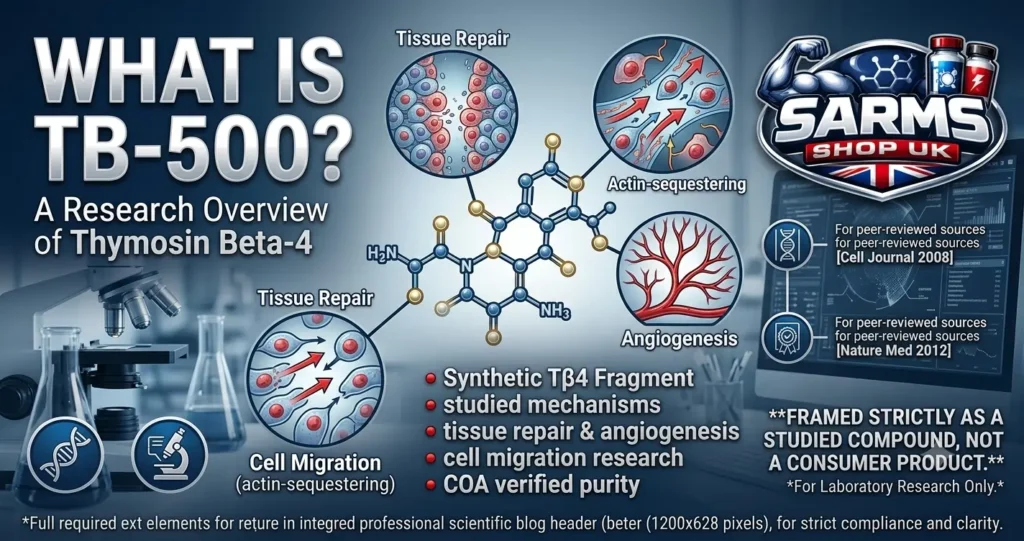
What Is TB-500? A Research Overview of Thymosin Beta-4
Jun
The field of regenerative medicine constantly seeks new mechanisms to accelerate healing at the cellular level. Among the most discussed compounds in modern biomedical research is TB-500. This synthetic peptide is of great interest to scientists studying tissue repair, wound healing, and cellular regeneration in laboratory settings.
However, widespread discussion often blurs the line between clinical science and consumer speculation. To clarify its actual role in modern science, this research overview breaks down exactly what TB-500 is. We will explore how it functions as a synthetic fragment of Thymosin Beta-4, examine emerging data from animal models, and highlight why strict laboratory sourcing standards matter.
Importantly, researchers utilize TB-500 strictly as an experimental compound. The scientific community relies on it for in-vitro studies and animal testing, not as an approved medical treatment for human consumption.
Origin and Structure: How TB-500 Relates to Thymosin Beta-4
To understand TB-500, researchers first examine its biological inspiration: Thymosin Beta-4 (Tβ4).
What is naturally occurring thymosin beta-4?
Thymosin Beta-4 is an endogenous protein containing 43 amino acids. The human body, along with almost all animal species, naturally produces this protein. It concentrates heavily in blood platelets, wound fluid, and various tissues, rushing to the site of cellular damage the moment an injury occurs.
Tβ4 plays a primary biological role through a process called “actin-sequestering.” Actin forms the dynamic scaffolding, or cytoskeleton, of every cell. When tissue sustains damage, cells must physically move into the wound bed to repair the area. Tβ4 regulates actin, allowing cells to alter their shape, divide, and migrate effectively. Without this mechanism, cellular repair grinds to a halt.
The Synthetic Fragment (TB-500)
While naturally occurring Tβ4 acts as a powerful regenerative agent, handling full-length proteins in a laboratory setting presents significant challenges. Large proteins degrade rapidly outside the body and often fail to penetrate target tissues effectively during experiments.
To solve this problem, scientists isolated the specific region of the Tβ4 chain responsible for its regenerative properties. TB-500 is the resulting synthetic fragment. Laboratories engineer this targeted peptide to mimic the active healing region of naturally occurring Tβ4. Because of its smaller molecular weight and targeted structure, TB-500 offers greater stability and easier administration in laboratory environments. Researchers utilize this synthetic version because it allows them to study the actin-sequestering process with more precision and consistency during in-vitro and in vivo animal trials.
What Current Research Investigates: Key Mechanisms of Action
Current scientific literature focuses heavily on how this peptide influences cellular behavior after trauma. Researchers primarily investigate three specific mechanisms of action using controlled animal models and petri-dish environments.
Tissue Repair and Cell Migration
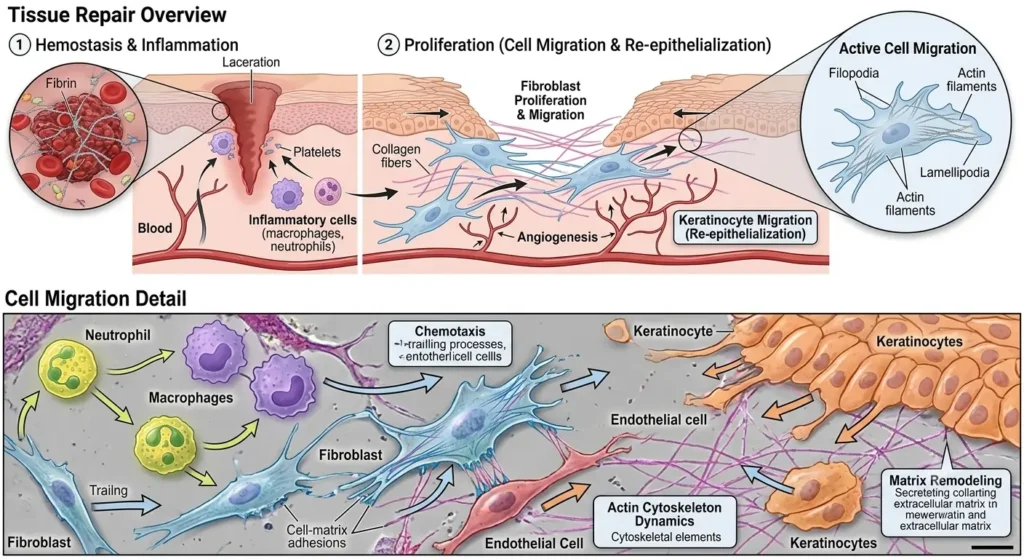
The most prominent area of TB-500 research revolves around soft tissue regeneration. When researchers introduce the peptide to an injury model, they consistently observe accelerated cell migration.
Specifically, the peptide promotes the movement of keratinocytes and fibroblasts. Fibroblasts build the extracellular matrix and collagen, while keratinocytes repair the outer layers of skin. By upregulating the movement of these specific cells, studies demonstrate that TB-500 significantly accelerates wound closure in animal models.
Researchers frequently apply the peptide to rat and mouse subjects suffering from skeletal muscle tears, tendon injuries, and dermal wounds. The resulting data shows that the peptide not only speeds up the healing timeline but also improves the structural integrity of the newly formed tissue, reducing the likelihood of excessive scar tissue formation.
Angiogenesis (Blood Vessel Formation)
Tissue cannot heal without a robust blood supply to deliver oxygen and nutrients. TB-500 research heavily investigates its role in angiogenesis—the physiological process through which new blood vessels form from pre-existing vessels.
Laboratory studies indicate that the peptide encourages endothelial cells to migrate and form new vascular networks within damaged tissues. In animal models involving cardiac ischemia (restricted blood flow to the heart), researchers observe that introducing TB-500 helps subjects develop collateral blood vessels. This angiogenic property makes the peptide a primary subject of interest for scientists studying cardiovascular repair and peripheral artery diseases in laboratory settings.
Inflammation Modulation
While inflammation serves as a necessary first step in the healing cascade, chronic or excessive inflammation destroys tissue and prevents recovery. Research points to TB-500 acting as a potent immunomodulator.
Instead of completely suppressing the immune system, the peptide appears to downregulate specific pro-inflammatory cytokines. By calming the localized inflammatory response, TB-500 shifts the cellular environment from a destructive state to a constructive, regenerative state. This modulation helps explain why animal models treated with the peptide often show reduced swelling and faster functional recovery following severe localized trauma.
Research Models vs. Clinical Use: The Evidence Gap
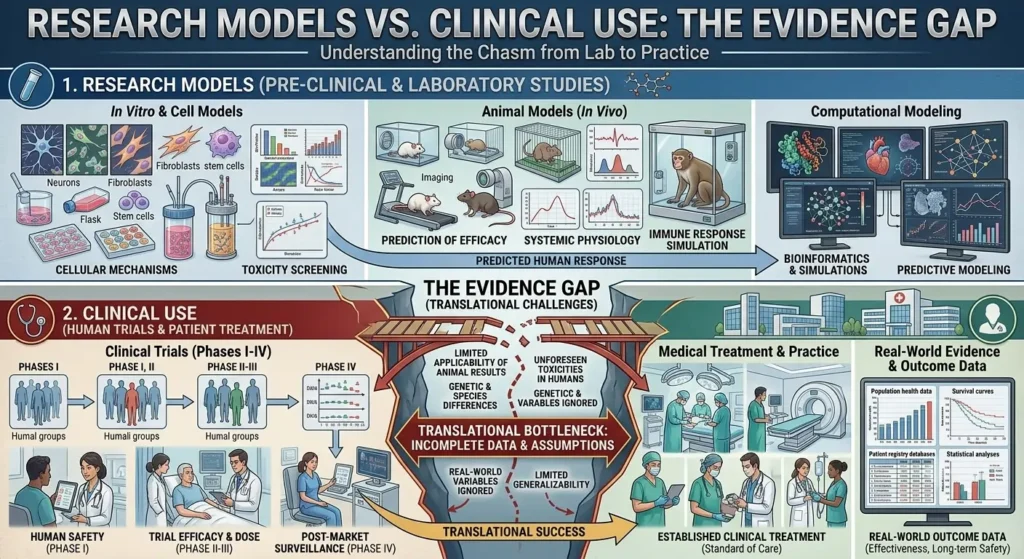
A significant pain point in the peptide industry involves the misinterpretation of scientific data. It remains crucial to draw a hard line between laboratory findings and clinical reality.
The Reality of the Data
When reading about the remarkable regenerative effects of TB-500 on muscle tears, ligament damage, or joint pain, readers must understand the source of the data. The vast majority of musculoskeletal research comes exclusively from rat, mouse, and equine models. Scientists have not replicated these broad systemic healing results in large-scale, peer-reviewed human trials.
Human Trials Context
This does not mean scientists ignore Thymosin Beta-4 entirely in human medicine. However, clinical trials exploring Tβ4 focus on highly specialized, localized applications. For example, researchers have conducted Phase II and Phase III clinical trials using Tβ4 formulations for ophthalmic diseases, such as neurotrophic keratitis (corneal healing) and severe dry eye syndrome. Other trials have explored topical applications for epidermolysis bullosa (a severe skin blistering disorder) and venous stasis ulcers.
These localized, tightly controlled medical trials differ drastically from the systemic injections of TB-500 frequently discussed on consumer forums for general sports injuries.
Regulatory Status
Due to this evidence gap, regulatory bodies worldwide maintain strict classifications. The U.S. Food and Drug Administration (FDA) and the UK’s Medicines and Healthcare products Regulatory Agency (MHRA) do not approve TB-500 for human use, dietary supplementation, or the treatment of any medical condition. The compound remains strictly designated as an experimental research chemical.
Purity and Sourcing: Laboratory Standards for Research Peptides
For biomedical researchers, sourcing materials presents a massive operational. Running an in-vitro experiment or an animal study requires extensive funding and precise controls. Introducing a degraded, underdosed, or impure peptide to a testing environment instantly invalidates the resulting data and ruins the experiment. visit our store for peptides.
The Importance of Third-Party Testing
Because the peptide industry operates outside of pharmaceutical regulations, quality varies wildly between suppliers. Professional researchers mitigate this risk by demanding strict laboratory standards. They refuse to use materials that lack independent, third-party analytical testing. Reputable suppliers submit their synthesized TB-500 to external laboratories that utilize High-Performance Liquid Chromatography (HPLC) and mass spectrometry to verify the compound’s exact molecular weight and amino acid sequence.
Reading a Certificate of Analysis (COA)
The ultimate proof of quality comes in the form of a Certificate of Analysis (COA). For researchers, a COA acts as a non-negotiable requirement before purchasing. A valid COA proves the purity level of the batch. Accurate scientific research typically requires a purity level exceeding 99%.
Furthermore, the COA ensures the absence of heavy metals, bacterial endotoxins, or harmful manufacturing byproducts, like trifluoroacetic acid (TFA), which can accumulate during the synthesis process and destroy live cell cultures. By verifying the COA, researchers protect the integrity of their data and the safety of their in-vitro or animal subjects.
Conclusion
TB-500 represents a fascinating advancement in the study of regenerative biology. As a synthetic fragment of thymosin beta-4, it provides researchers with a stable, highly effective tool for investigating actin-sequestering, cell migration, and angiogenesis. The data emerging from animal models continues to highlight its potential in accelerating soft tissue repair and modulating inflammation.
However, scientific curiosity must not outpace clinical evidence. TB-500 remains an unapproved, experimental compound. As research continues, the scientific community will rely on high-purity, third-party tested peptides to uncover the full capabilities of this powerful biological fragment.
