
Blog
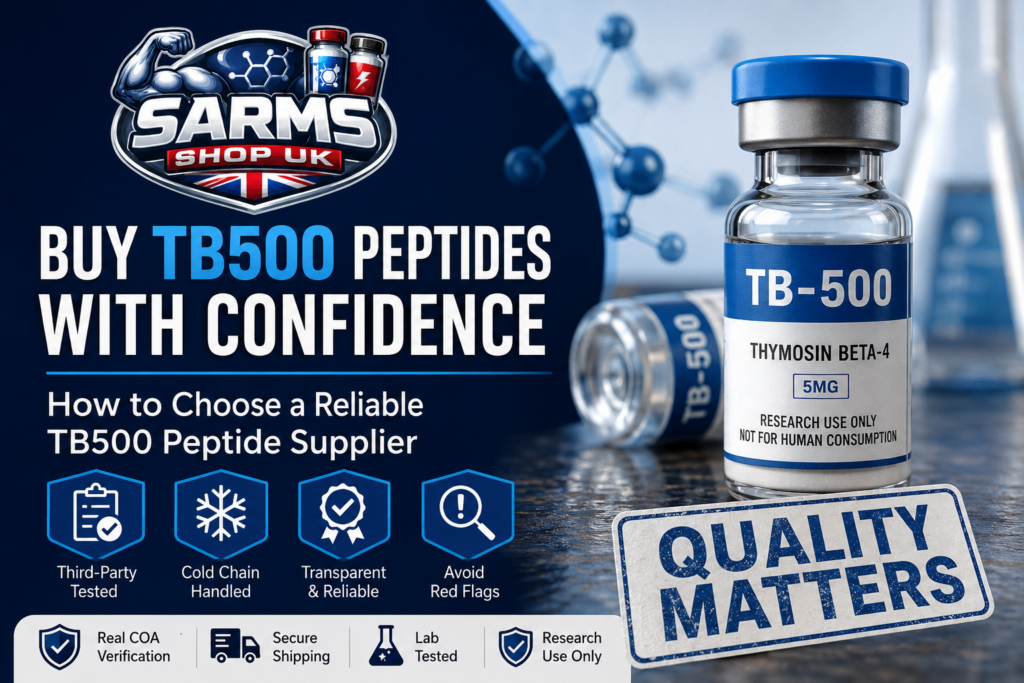
Buy TB500 Peptides With Confidence: How to Evaluate a Reliable Supplier
Jul
The market for research peptides has grown rapidly over the past few years, giving researchers access to hundreds of online vendors. Among these compounds, TB500 peptides continue to attract significant attention because of their role in preclinical research involving tissue repair, cellular migration, and regenerative mechanisms.
However, this surging demand introduces a critical challenge: finding a trustworthy supplier. A simple online search for terms like buy TB500, TB500 peptide for sale, or where to buy peptides reveals dozens of vendors claiming to sell high-quality products. Yet, quality control and transparency vary wildly across the industry.
Research peptides are fundamentally different from standard consumer goods. A poorly manufactured peptide with questionable purity or improper handling can compromise an entire research project, yield inaccurate data, and waste valuable resources. In scientific research, the value of a product goes far beyond the vial itself—it is an investment in reliable data and reproducible results.
When looking to buy TB500 peptides, researchers must evaluate suppliers using objective criteria: third-party testing documentation, strict cold chain handling, operational transparency, and the ability to spot red flags.
Understanding TB500 Peptides
TB500 is a synthetic peptide derived from Thymosin Beta-4 (Tβ4), a naturally occurring protein found in high concentrations in various cellular tissues. In preclinical studies, researchers examine its specific roles in:
-
Cellular migration and proliferation
-
Tissue remodeling and angiogenesis (new blood vessel formation)
-
Wound healing and down-regulating inflammatory mechanisms
TB500 is typically supplied as a delicate lyophilized (freeze-dried) powder that requires highly controlled manufacturing and storage environments. Because these peptide chains are incredibly sensitive to environmental degradation, supplier verification is a mandatory first step before initiating any purchase.
The Third-Party Certificate of Analysis (CoA)
A Certificate of Analysis (CoA) is the single most important document a peptide supplier can provide. It serves as an independent laboratory quality report verifying the purity and exact molecular identity of the compound.
What a Genuine CoA Must Include
An authentic, verifiable CoA is never just a block of text. It must explicitly include:
-
Analytical Methods: Clear evidence of High-Performance Liquid Chromatography (HPLC) to verify purity levels, alongside Mass Spectrometry (MS) to confirm the exact molecular weight and identity of the peptide.
-
Raw Chromatograms: The actual visual graph outputs from the HPLC/MS testing, showing a sharp, definitive peak that indicates a high percentage of target purity (typically looking for $\ge 98\%$).
-
Independent Laboratory Credentials: The specific name, contact details, and testing date from an un-affiliated, third-party analytical lab.
[Production Batch] ──► [Third-Party Lab Testing] ──► [HPLC/MS Graph Output] ──► [Matches Unique Vial Label]
The Critical Role of Batch Numbers
A major indicator of a reliable vendor is batch-specific documentation. If a supplier displays the same CoA for years without updating the batch or lot numbers, there is no traceability. A reputable supplier links every customer order directly to a specific manufacturing run, ensuring the vial in your hand matches the lab data on file.
Cold Chain Handling and Storage Standards
Peptides are fragile, temperature-sensitive molecules. Exposure to excessive heat, moisture, UV light, or prolonged transit delays can break down their delicate amino acid chains, rendering the compound useless for consistent scientific study.
Storage Standards
Professional peptide distributors maintain strictly climate-controlled storage environments, keeping lyophilized powders at stable, sub-zero temperatures (typically $-20^\circ\text{C}$ or lower for long-term preservation).
Shipping Conditions
While lyophilized peptides are more stable during short-term transit than reconstituted solutions, shipping practices still matter immensely. Reliable suppliers provide:
-
Clear explanations of their climate-insulated packaging procedures.
-
Expedited shipping windows to minimize environmental exposure.
-
Transparent post-delivery storage guidance to help researchers preserve material integrity for future testing stages.
Transparency Signals vs. Supplier Red Flags
Separating elite research chemical vendors from substandard businesses requires a quick audit of their transparency signals versus common operational red flags.
| Evaluation Metric | Reliable Supplier Signals | Questionable Vendor Red Flags |
| Purity Claims | Backed by batch-specific, verifiable CoAs. | Vague marketing jargon like “pharmaceutical grade” without data. |
| Analytical Data | Full HPLC/MS chromatograms openly accessible. | Generic certificates lacking dates, batch IDs, or lab names. |
| Pricing Model | Fair, market-standard pricing reflecting testing overheads. | Suspiciously low prices designed to liquidate unverified stock. |
| Compliance & Labeling | Explicitly labeled as “Research Use Only”. | Misleading formatting or consumer-focused usage implications. |
| Communication | Open technical support channels with verifiable contact info. | Anonymized websites with zero technical or customer accountability. |
Summary Strategy for Sourcing TB500
When evaluating where to buy TB500 peptides, the driving factor should never be the lowest price tag. Instead, successful procurement hinges on traceability and objective verification.
Prioritize suppliers that provide unredacted, third-party HPLC/MS data; demonstrate a clear understanding of peptide stability, and maintain open communication regarding their quality control workflows. By establishing these stringent validation baselines, researchers can safeguard their studies, ensure reproducible data, and run their projects with complete confidence.
Frequently Asked Questions (FAQ)
What is the difference between Thymosin Beta-4 and TB500?
While the names are often used interchangeably in research settings, Thymosin Beta-4 (Tβ4) is the full-length, naturally occurring protein consisting of 43 amino acids. TB500 is a short, synthetic peptide fragment (specifically representing amino acids 17 to 23 of the Tβ4 chain) that contains the primary active healing sequence responsible for cellular migration and tissue repair.
What purity level should I look for when buying TB500?
For reliable, reproducible experimental data, you should look for a minimum purity of 98% or higher on the High-Performance Liquid Chromatography (HPLC) report. Lower purity scores indicate the presence of synthesis leftovers or unidentifiable impurities that can ruin the accuracy of your study.
How should lyophilized TB500 be stored before use?
-
Short-term storage (under 3 months): Keep the lyophilized powder refrigerated between 2°C and 8°C.
-
Long-term storage (over 3 months): Store the vials in a controlled freezer at -20°C or colder, away from moisture and direct light exposure.
Why is an HPLC graph more reliable than a vendor’s text claim?
A text claim on a website can be typed out by anyone. An HPLC chromatogram graph shows visual proof of chemical separation, featuring a sharp, distinct peak that reflects the absolute purity of that specific peptide batch. If a vendor cannot provide the raw graph data, their claims are unverified.
Can a peptide be damaged during standard shipping?
Yes. Lyophilized peptides are susceptible to excessive heat and intense kinetic vibration during transit. While short exposures to room temperature rarely destroy a freeze-dried cake immediately, reliable suppliers pack these delicate compounds using specialized thermal padding to protect them against unpredictable shipping conditions.
How do I verify if a supplier’s Certificate of Analysis (CoA) is real?
Check for three main criteria: an independent lab’s clear letterhead, a recent analysis date, and a batch number that directly matches the label printed on your product vial. If you suspect a document is fake, you can contact the independent testing laboratory listed on the letterhead to confirm the authenticity of that specific report.
